Take a look back at this “incredibly inspiring and hopeful” event, sharing solutions to protect and restore nature.
“One of the most uplifting, energising and informative events that I have been to in years”, “invigorating and thought-provoking”, and “a powerful reminder of what’s possible when passion and purpose meet.”
Our sold-out People for Planet Summit gathered 18 speakers from 10 countries, including Whitley Award-winning conservationists, at London’s Royal Institution on 8 October. Ahead of COP30 when world leaders will convene in the Brazilian Amazon, the one-day event explored solutions to conserve nature with leaders from the worlds of science, technology, finance and the arts.

Hosted by science and natural history broadcaster Liz Bonnin, the special event welcomed over 350 people, with Her Royal Highness The Princess Royal, Whitley Fund for Nature’s Patron for more than 25 years, attending some of the afternoon’s sessions.

Across panels, a keynote and lightning talks, speakers discussed tracking animals from space, using AI to map the biosphere, the latest innovations in nature finance, how species are moving in response to climate change, and more. We heard updates from the field from the world’s most biodiverse countries, gained a deeper understanding of the challenges we face, and celebrated conservation successes – from rebounding species to government agreements and big lawsuit wins.

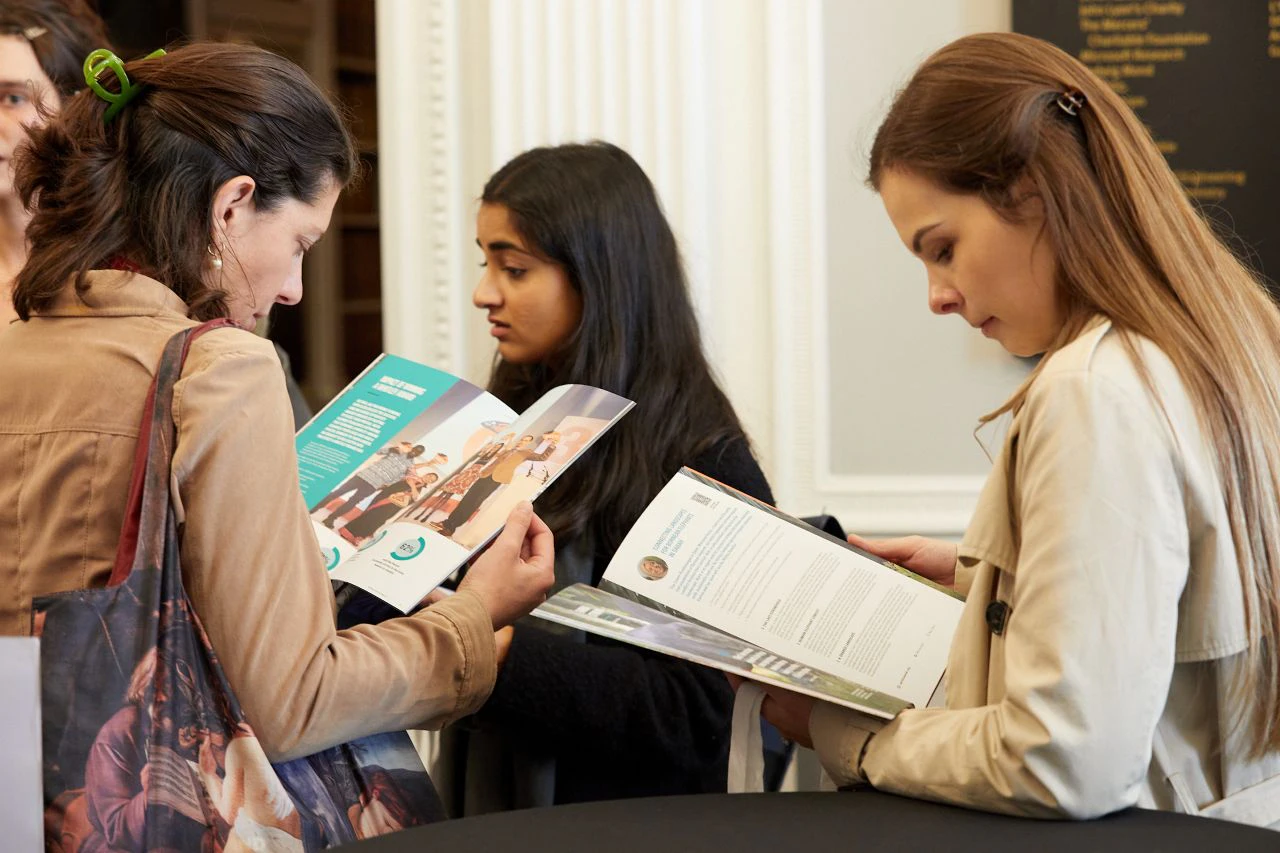
Throughout the day, networking breaks offered attendees the chance to meet the speakers and form new connections with an audience packed with conservationists, students, journalists, and industry professionals.


Themed ‘Turning the Tide: Stories that Inspire Change’, the Evening of Storytelling was hosted by BBC News’ Luxmy Gopal and featured TED-style talks from Whitley Award winners, a moving performance from THE HERDS, and a sneak preview of the brilliant ‘A Gorilla Story’, David Attenborough’s new feature documentary for Netflix. Watch the talks here.
“Seeing all the speakers and hearing the stories has allowed my son to see he can make a difference in a world that at times feels hopeless.”

At a critical time for nature, our second People for Planet Summit showcased the power of cross-sector innovation, collaboration and storytelling for biodiversity protection and scaling local solutions to address the urgent challenges facing our planet.
Browse a gallery of photos from the event. Watch a selection of the talks on YouTube.
Summit speakers and Whitley Award winners were featured across top media outlets. Read more here.
THE FUTURE OF CONSERVATION, FROM TECHNOLOGY TO FINANCE
Our first panel of the day, moderated by broadcaster and WFN Ambassador Tom Heap, explored ‘The Future for Forests’ with Kew’s Executive Director of Science, Professor Alexandre Antonelli and Whitley Award winners: Farwiza Farhan, a forest conservationist protecting Indonesia’s Leuser Ecosystem, and Dr Fernando Trujillo who has worked in the Amazon for more than 30 years.

Forests cover roughly one-third of the world’s land area but are home to 80% of the planet’s terrestrial species, including around 300 million people, and play a pivotal role in regulating the climate. Discussion ranged from how record prices of gold are impacting the Amazon and river dolphins through mercury levels, a byproduct of illegal mining, to the importance of conservationists focusing on the local, before expanding to the regional, national and international.
For Farwiza, ‘conservation success’ is too often defined by “losing a little less” rather than “increasing” forest cover. Driven by devastating fires in the Amazon a few years ago, Alexandre announced the opening of a new research station in the Atlantic Forest, with researchers and ecotourists joining forces for biodiversity preservation.

Keynote speaker Professor Martin Wikelski, founding Director of Max Planck Institute of Animal Behaviour, fascinated the audience with his investigations into global animal migrations and pioneering system for continuously tracking thousands of animals from space, ICARUS. This game-changing technology will be available to scientists, conservation managers, park rangers and citizen scientists everywhere.
Accompanied by a model satellite, Martin shared details in his conversation with Dr Anjana Ahuja of the upcoming satellite launch to create the “internet of animals” and how to tap into their ‘sixth sense’ using tiny AI sensors which map their behaviour. In a preview of the potential power of the data, his team found that farm animals could sense an earthquake up to 12 hours before it hit.

Martin and Anjana were joined on stage by Dr Rachel Graham, marine conservationist and 2011 Whitley Gold Award winner; Dr Munir Virani, raptor conservationist and 2018 Whitley Award winner; and Dr Fernando Trujillo to discuss on the ground ‘Innovation in Conservation: eDNA, Bioacoustics, Drones, AI’.
Rachel shared how Environmental DNA (eDNA), detecting species through genetic material shed into the environment, helped her team to locate nine sawfish – a species believed to be extinct locally. Using tri-axial accelerometers, similar to what’s found in your phone to help swivel the screen with movement, Rachel and team also discovered that great hammerhead sharks swim sideways, saving 10% of their energy. Munir explained how AI technology applied to wind turbines can help detect shapes of approaching birds – up to 3km away – and send a signal to stop the turbine within seconds.

Through satellite tagging river dolphins, Fernando and team discovered that females and calves remain in the same areas while males move a lot further, 400 to 500 km along the rivers – showing the importance of protecting nursery areas. When compared to viewing from a boat, drones also give a much better view of dolphin numbers from above – particularly important when prioritising which areas of rivers most need to be protected.
From the cost of sensors to their battery life and retrieval, the speakers shared how this rare opportunity to come together and exchange experiences and learnings had resulted in plans for collaboration and future projects.

Much information we need about the natural world has never been recorded, such as the boundaries between the rough grasslands and wetlands. In ‘Mapping the Biosphere with Google DeepMind’ with Dr Drew Purves, Nature Lead, in conversation with climate journalist Maeve Campbell, we learned how Google DeepMind is partnering with others to create, for the first time, an accurate, opensource global map of the habitats and species that comprise the biosphere.
This will, among other things, help policymakers and environmentalists best identify areas, such as old forests, that need the most protection. Drew stressed the crucial role of local organisations, communities, and citizen science in contributing to the data collection, giving the example of how data from his own garden in Norfolk feeds into the map. Watch the talk on Youtube.

Scientists estimate that half of all species are on the move. Our flagship panel, ‘Species on the Move’ – featuring five Whitley Award winners, including conservationist Anjali Watson, and moderated by BBC News presenter and reporter Luxmy Gopal – looked at how species around the world are adapting to our changing planet.
In Sri Lanka, Anjali and team have observed that leopards have become almost entirely nocturnal – not in response to climate but to avoid humans, whilst wider afield, leopards are moving towards the poles and coming into contact with snow leopards – to the detriment of snow leopards.
Munir shared how with less snow in the winter in Europe, Tawny Owls (brown in colour) are thriving while grey owls (which blend with the snow) are becoming less common, whilst New York is now home to the highest concentration of peregrine falcons (world’s fastest bird) in the world. Rachel highlighted the unusual behaviour of two orcas in particular that are killing and feeding off sharks in South Africa, and told Peggy the turtle’s story, which became a minor celebrity in Belize due to her 3,700 km search to find her natal beach that had been developed.

In ‘Money: How to balance the needs of the Planet’, Oliver Withers, Head of Nature at Standard Chartered spoke to Lara Williams, Climate change columnist for Bloomberg Opinion about what the financial industry can do to close the $700 billion annual nature finance gap. Oliver gave examples such as the Bahamas Debt for Nature Swap, using the analogy of incentives to install solar panels when remortgaging your house; the Rhino Bond in South Africa, where bond returns are linked to environmental performance and enable longer-term planning; and Standard Chartered selling forest protection carbon credits with a state in Brazil’s Amazon rainforest which will benefit Indigenous and local communities.
He also highlighted the imbalance in rewards for risk takers in finance vs the risks that rangers make on the ground to protect nature every day. He closed his talk with a call for collaboration over competition, sharing a saying from South Africa: “If you want to go fast, go alone. If you want to go far, go together.”

Inspired by discussions during our recent regional Winner Network Training in Madagascar, entomologist, evolutionary biologist, WFN Trustee and Gold Award winner, Dr Dino Martins asked us to consider ‘What is a Modern-Day Conservationist?’. He highlighted the deep, fundamental connection between people and nature that cuts across many definitions and perspectives, as seen throughout the summit. He argued that this broadening and deepening of the definition of a conservationist is “imperative for the survival of both people and planet today”.
TURNING THE TIDE
How can stories inspire change? How do we imagine a new relationship with nature? How are grassroots efforts on the ground bringing about big wins for wildlife and the people who live alongside them?
Our Evening of Storytelling brought the day to an inspiring close with seven incredible talks from five Whitley Award winners (to be published on Youtube shortly), and special guests Amir Nizar Zuabi, Artistic Director of The Walk Productions and Alastair Fothergill OBE, Co-founder and Director, Silverback Films. Watch the talks on Youtube here.
THE HERDS’ theatrical production of animal puppets recently walked through London, on a 20,000 km journey from central Africa to the Arctic to spark climate change engagement. Through an incredibly moving account, Nizar shared how they discovered not only how fragile our environments are, but also “how resilient nature can be and how resilient people can be when they work together. It became a moment to grieve for what we are losing but also an invitation to think differently, to adapt…”


Much to the audience’s surprise, a gorilla puppet interrupted by bursting into the historic theatre, investigating the unfamiliar environment and those in the room, before being released from the space by Nizar.
Listing ‘humans’ as her focal species, Farwiza Farhan is the founder of Indonesia’s Yayasan HAkA and works to protect, conserve and restore Indonesia’s irreplaceable Leuser Ecosystem through advocacy. Together, she and community members have helped bring legal action against palm oil companies illegally burning the forest, resulting in fines of as much as $26 million, and overturned permits for a US$3bn mega-dam that would have destroyed 9,884 acres of pristine rainforest, safeguarding food and water security for over four million people.
Kenya’s Dr Munir Virani, a world leading expert in raptors and chief executive of Abu Dhabi-based Mohamed Bin Zayed Raptor Conservation Fund, shared the unlikely story of X26 and his four chicks, and offered a real solution to halt the drastic loss of raptors and other birds through unnecessary death caused by electric poles.
An expert in leopards and pioneer of the Corridors for Conservation initiative in Sri Lanka’s Central Highlands, Anjali Watson explored her and WWCT’s longstanding work to connect the fragmented habitat of the country’s apex predator in a landscape dominated by tea estates, “leopards living in those unusual yet vital spaces.”

The most famous sequence in wildlife filmmaking is likely WFN Ambassador Sir David Attenborough’s encounter with gorillas in ‘Life On Earth’ – a baby gorilla, called Pablo, playing on David’s knees. Alastair previewed three moving clips from David Attenborough’s upcoming feature documentary for Netflix, shared more on the amazing story of the silverback that Pablo became and his descendants today, revealing behaviour new to science and giving insight into how the documentary was made.
The founder of the NGO, Omacha Foundation, Dr Fernando Trujillo advised the governments of Colombia, Brazil, Peru and Ecuador on river dolphin protection and led on an 11-country treaty for river dolphins. He also worked to train 200+ local people to rescue and translocate dolphins in very remote parts of Brazil, Colombia and Venezuela.
Founder of NGO MarAlliance, Belize’s Dr Rachel Graham masterminded the first shark “superhighway” linking Mexico’s newly protected Quintana Roo coast to Belize’s 15 marine protected areas. Rachel underlined the importance of monitoring and understanding animal’s shifting behaviours by drawing a comparison to our own individual maps – from finding food as preferences and resources change, to a web of connections on London’s underground map.
A heartfelt thank you to each of our speakers and to all those who attended the summit for your curiosity, enthusiasm, and support. We hope you’ll join us again at our next Whitley Fund for Nature event.
If you’d like to support our work and that of more than 220 grassroots conservation leaders in 80+ countries, find out more here.