BRINK OF EXTINCTION
The hirola is arguably the world’s rarest antelope: Critically Endangered, they are among the top ten species at risk of imminent extinction and inhabit the precarious Kenya-Somalia border outside of formally protected areas. They have declined by over 95% in the last four decades, with fewer than 500 individuals remaining. Their extinction would mark the first loss of an entire mammalian genus in over 80 years, representing an irreplaceable portion of evolutionary history that could disappear forever.
LOCAL ROOTS
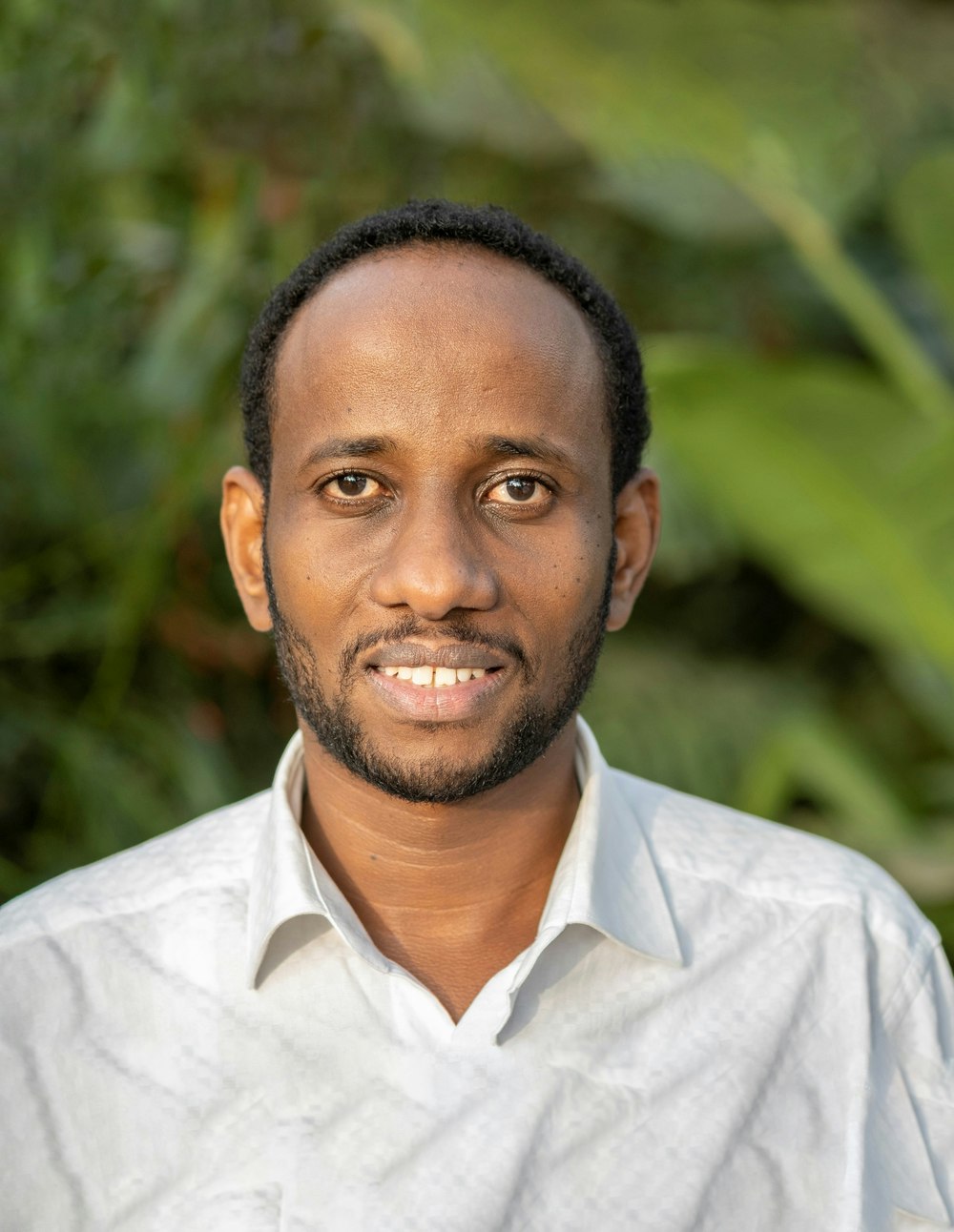
Growing up in the region, Ali founded the Hirola Conservation Programme to partner communities and preserve this unique species firsthand. Working with pastoralists, he will introduce a planned grazing system to minimise the spread of disease between hirola and livestock and avoid overgrazing of grasslands. Rangers will be trained to restore degraded habitat and use standardised field monitoring methods for hirola, with a centralised database to assimilate information.
CAPACITY BOOST
To ensure their long-term persistence, Ali will work to reinstate the 500km2 Arawale National Reserve and strengthen the overarching institutional framework across all hirola conservancies to align conservation efforts and build vital capacity. Regular patrols will protect the antelope from poaching and benefit other wildlife, such as elephants and giraffes. His team will also reach over 6,000 children and adults through education to improve awareness of the species and its conservation status. Ali is a local hero, working towards a peaceful future for hirola and the people.
Ali and his team will:
- Strengthen the institutional framework to support protected areas governance and re-establish Arawale National Reserve
- Introduce livestock grazing systems across 3 conservancies to prevent overgrazing of the grasslands on which hirola rely
- Restore 1,000 ha of degraded hirola habitat in 4 conservation areas
- Standardise hirola monitoring protocols and streamline data management
TOP FACTs:
- Often referred to as a living fossil, the hirola is 69th on the Evolutionarily Distinct and Globally Endangered (EDGE) mammals list
- Most people in this area are nomadic pastoralists, with poverty rates estimated at >80%
- Rarely seen with fewer than 500 in the wild, hirola are considered a symbol of good luck by indigenous communities.
“I see the hirola as my immediate relative; I feel a very strong obligation to act and put the hirola back into Noah’s ark.” – Abdullahi Hussein Ali
2025 CONTINUATION FUNDING
Scaling community-led restoration for hirola recovery
With a global population fewer than 500 individuals, the Critically Endangered hirola antelope is listed among 10-top focal species at risk of imminent extinction by the Zoological Society London. Once numerous across parts of Kenya and Somalia, hirola are currently restricted to Kenya’s Garissa County in fragmented, tree-encroached rangelands. Through community-led conservation efforts, Ali, Hirola Conservation Program (HCP) and local communities are working together to save the world’s most endangered antelope – leading to a near 5-fold increase in its population today.
While their previous WFN funded work laid a solid foundation by restoring 1,000 ha of hirola rangelands, reinstating Arawale National Reserve, and digitising monitoring across hirola community conservancies, significant challenges remain. These include persistent habitat degradation, limited economic incentives for local stewardship, and increased vulnerability to climate change impacts, such as the severe drought experienced in 2023.
Ali and team are tackling these threats head-on, generating sustainable conservation impacts by expanding the grasslands hirola need to survive by a further 1,500 ha, and building a resilient native grassland seedbank ready for the wet season rains in seasons to come. With Continuation Funding, the team will expand two community-owned nature-based enterprises, such as Hirola Briquettes and grass seed harvesting; strengthen their community awareness and outreach programmes to reach an additional 10,000 people; and reinforce sustainable grazing systems across three conservancies to reduce overgrazing and disease transmission between livestock and wildlife. Community members trained during the first phase will now lead implementing and managing restoration activities and nature-based businesses, fostering long-term local ownership.
Film credits: AMISOM Public Information


