The Whitley Award donated by The Shears Foundation in memory of Trevor Shears
GLOBAL STRATEGY
The creation of the Global Snow Leopard and Ecosystem Protection Programme (GSLEP) in 2013 brought together governments from all 12 snow leopard range countries to agree a comprehensive conservation strategy to ensure the long-term survival of these big cats across their range. This landmark agreement reflects the need for transboundary cooperation and seeks to identify and secure 23 important snow leopard landscapes with the help of local communities by 2020.

HUMAN-WILDLIFE CONFLICT
Within Pakistan, snow leopards are considered critically endangered. Pakistan’s current protected area system is not adequate to sustain viable populations of snow leopards, and outside protected areas local communities rely heavily on rangelands and forests for survival. Poaching, habitat degradation and subsequent decline of natural prey species are major threats to snow leopards and have led to increased livestock predation. This loss can amount to the equivalent of a month’s salary, and sometimes snow leopards are killed by herders in retaliation.

LANDSCAPE-LEVEL APPROACH
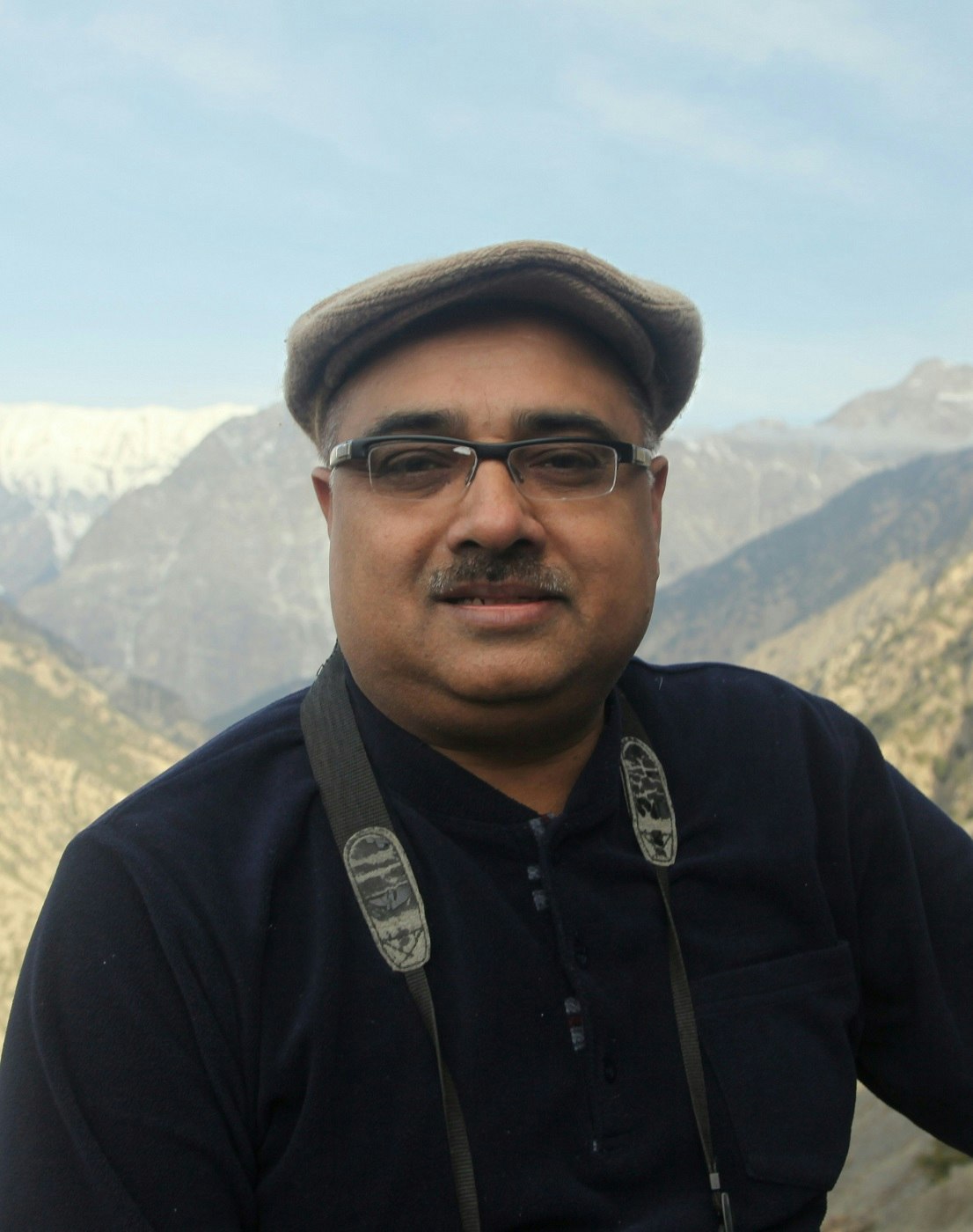
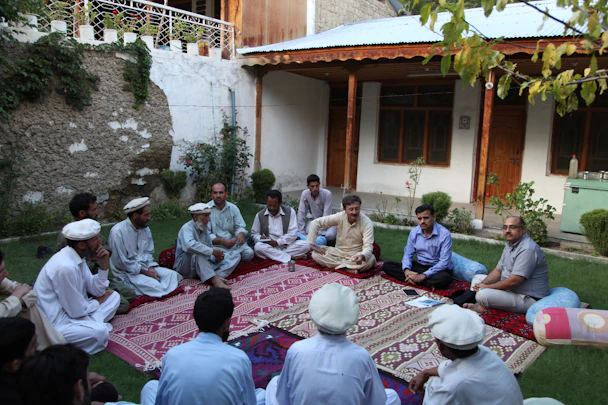
Based at the Quaid-i-Azam University, Muhammad Ali Nawaz leads the snow leopard programme in Pakistan, which is a partnership initiative between the Snow Leopard Foundation, Federal Ministry of Climate Change, provincial Wildlife Departments and local communities. Working in the Pamir-Karakoram mountain complex, one of the priority landscapes identified by the GSLEP, Ali is bringing together people, NGOs and government in a unified effort to develop a management plan for this habitat. Ali is testing possible solutions and replicating successful approaches in the region to enable co-existence of communities and carnivores. Livestock insurance and vaccination programmes to reduce losses and increase tolerance are being introduced alongside increasing vital capacity and research efforts to conserve this elusive species.
Ali’s project will:
- Establish a multi-stakeholder strategy to ensure survival of snow leopards and their prey in the Pamir-Karakoram landscape covering 25,000km².
- Train 50 wildlife managers to implement, monitor and enforce sustainable landscape management measures.
- Engage 6,000 people through improved husbandry, livestock vaccination and insurance programmes.
- Scale up research into snow leopard abundance and resource use.
Why it matters:
- This will be Pakistan’s first landscape-level strategy for snow leopard conservation and will be used as a model to guide future conservation planning.
- The project will be one of the initial steps towards achieving the GSLEP’s 2020 goal.
- Herding communities lack economic safety nets to protect them against livestock losses, which insurance and vaccination programmes help to buffer against.
“Whitley Award funding will make possible large-scale activities that, until now, we have not been able to support.”
2021 continuation funding
£50,200 over two years
Landscape-Level Support for Snow Leopards and People in Pakistan
Gilgit-Baltistan is at the intersect of four globally important mountain ranges – KaraKorum, Pamir, Hindukush and Himalaya – and at the heart of the snow leopard’s range, which extends across 12 countries. Muhammad Ali Nawaz and the Snow Leopard Foundation developed Pakistan’s first landscape-level strategy for snow leopard conservation with his 2016 Whitley Award. In consultation with communities, civil society and government, this new project will achieve the same for the Hindukush landscape, covering 13,888 km² across six valleys in Gilgit-Baltistan.
Snow leopards are under severe threat from habitat degradation, and the subsequent decline of natural prey leads to increased livestock predation. Remote herding communities lack economic safety nets to protect them against losses, so Ali is scaling up successful animal husbandry and vaccination programmes that improve livelihoods and reduce the likelihood of snow leopards being killed in retaliation.

Ali will also monitor threatened species, including snow leopard prey, across 7,750 km² by improving the capacity of wildlife rangers and introducing Spatial Monitoring and Reporting Tool (SMART) technology. This will ensure that landscape-level management can balance core areas, buffer zones, and corridors for wildlife with ecosystem services and livelihoods for people.
2025 CONTINUATION FUNDING
Community-based approach to conserve snow leopards and improve livelihoods
Snow leopards are Vulnerable on a global scale and Critically Endangered within Pakistan’s boundaries – a habitat covering approximately 80,000 km². Ali and the Snow Leopard Foundation (SLF) team will strengthen their conservation and enhance the livelihoods of local communities in the newly designated Terich-Torkhow Conservancy by scaling up interventions successfully piloted under past WFN Funding.
This unique ecosystem in Northern Pakistan is under mounting pressure, with many threats such as human-wildlife conflict, poaching, illegal hunting as well as unsustainable land use and habitat degradation. The impacts of climate change are intensifying, further destabilising fragile ecosystems and increasing risks for approximately 14,700 residents.
Weaving biodiversity protection and sustainable community development, this project will empower existing community-based organisations, build the capacity of wildlife managers and community activists, promote sustainable livelihood activities, and provide training to SLF staff. To promote sustainable resource management, the team will install a solar-powered system to lift water from the river and plant 10,000 forest and 2,000 fruit trees. To reduce human-wildlife conflict, the project will vaccinate and deworm livestock through trained Community Ecosystem Health Workers, build more predator-proof corrals, and pilot a community-based livestock insurance scheme. Community Wildlife Guards will prevent poaching and conduct awareness campaigns on snow leopard conservation, and the team will conduct biodiversity monitoring over 260,000 ha to assess snow leopard occupancy and other endangered species, alongside livestock assessments to inform conservation policy and management.


